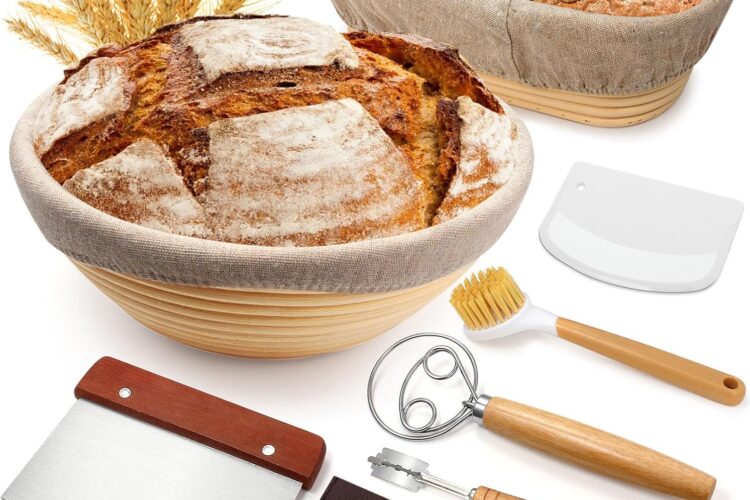
Sourdough baking has experienced a remarkable resurgence in recent years, captivating home bakers and culinary enthusiasts alike. At the heart of this craft lies a combination of patience, technique, and the right tools. Among these tools, a sourdough proofing basket gift set stands out as an essential companion for anyone seeking to create beautiful, well-structured loaves at home.
This article explores the purpose, components, and practical value of a sourdough proofing basket gift set—specifically one that includes a 9-inch round and 10-inch oval banneton, along with accessories like a bread lame, Danish whisk, bowl scraper, dough scraper, and linen liners. Whether you’re new to sourdough or looking to refine your baking setup, understanding how these tools work together can significantly enhance your results.
Understanding the Role of Proofing in Sourdough Baking
Proofing is a critical stage in bread making, particularly for sourdough. After mixing and kneading, dough undergoes fermentation, during which natural yeast and bacteria develop flavor and structure. Proofing refers to the final rise before baking, where the dough gains volume and elasticity.
Proper proofing requires support to maintain shape and encourage even expansion. This is where banneton baskets come into play. These baskets provide structure while allowing airflow, helping the dough develop a slightly dry surface that improves scoring and crust formation.
What Is a Banneton Basket?
A banneton, also known as a proofing basket, is traditionally made from natural rattan cane. It is designed to hold dough during its final rise. The spiral pattern of the basket not only supports the dough but also leaves a distinctive imprint on the crust, giving artisan bread its characteristic appearance.
Round vs. Oval Bannetons
A typical gift set includes both a 9-inch round and a 10-inch oval banneton, offering versatility in shaping:
- Round banneton (boule): Ideal for classic round loaves with even crumb distribution.
- Oval banneton (batard): Suitable for elongated loaves, often preferred for slicing and sandwiches.
Having both shapes allows bakers to experiment with different styles and presentations.
Key Components of a Sourdough Proofing Basket Gift Set
A comprehensive sourdough kit includes more than just baskets. Each tool serves a specific purpose in the bread-making process, contributing to efficiency and consistency.
1. Bread Lame
A bread lame is a specialized scoring tool equipped with a razor blade. It is used to make precise cuts on the surface of the dough before baking.
Why scoring matters:
- Controls how the dough expands in the oven
- Prevents random tearing
- Enhances visual appeal
Clean, deliberate scoring is essential for achieving the “oven spring” that defines artisan sourdough.
2. Danish Whisk
The Danish whisk, also known as a dough whisk, features a unique looped design that makes mixing thick doughs easier.
Benefits:
- Efficiently combines flour and water
- Reduces hand fatigue
- Minimizes overmixing
This tool is particularly helpful during the initial mixing phase, especially when working with high-hydration sourdough recipes.
3. Bowl Scraper
A bowl scraper is a flexible tool used to remove dough from mixing bowls.
Functions:
- Prevents waste by collecting all dough
- Helps with folding and turning dough
- Keeps hands cleaner during handling
Its curved edge makes it ideal for working with sticky sourdough mixtures.
4. Dough Scraper (Bench Scraper)
The dough scraper, often made of metal or sturdy plastic, is used on the work surface.
Uses include:
- Dividing dough into portions
- Transferring dough from surface to basket
- Cleaning flour and residue from countertops
It is a versatile tool that improves workflow and precision.
5. Linen Liners
Linen liners are cloth inserts placed inside banneton baskets.
Advantages:
- Prevent sticking, especially with wetter doughs
- Create a smoother crust (without spiral pattern)
- Easy to remove and clean
Bakers can choose whether to use the liner depending on the desired finish of the loaf.
Materials and Craftsmanship
Most banneton baskets are made from natural rattan, a durable and breathable material. This allows air circulation around the dough, which helps form a dry outer layer—ideal for scoring and crust development.
Linen liners are typically made from unbleached cotton or flax, chosen for their absorbency and natural texture. Tools like the Danish whisk and scrapers are often constructed from stainless steel and food-grade plastic, ensuring durability and hygiene.
Benefits of Using a Complete Sourdough Kit
Consistency in Results
Using dedicated tools helps standardize each step of the process. From mixing to proofing, each component contributes to repeatable, high-quality outcomes.
Improved Dough Handling
Sticky, high-hydration doughs can be challenging. Scrapers and whisks simplify handling, reducing frustration and mess.
Enhanced Presentation
The visual appeal of sourdough—its crust, scoring, and shape—is part of its charm. Banneton baskets and lames help achieve bakery-quality aesthetics at home.
Efficient Workflow
Having all necessary tools in one set streamlines the baking process, making it more enjoyable and less time-consuming.
How to Use a Sourdough Proofing Basket Set
Step 1: Prepare the Dough
Mix flour and water using the Danish whisk. Allow the dough to rest (autolyse), then incorporate the starter and salt. Perform stretch-and-fold techniques during bulk fermentation.
Step 2: Shape the Dough
Once fermentation is complete, shape the dough into a boule or batard. Use the dough scraper to assist with handling.
Step 3: Prepare the Banneton
Dust the banneton or linen liner with flour (rice flour is often preferred for its non-stick properties). Place the shaped dough seam-side up into the basket.
Step 4: Final Proof
Cover the basket and allow the dough to proof at room temperature or in the refrigerator, depending on the recipe.
Step 5: Score and Bake
Turn the dough onto a baking surface, score with the bread lame, and bake in a preheated oven—often with steam for optimal crust development.
Maintenance and Care
Proper care extends the life of your tools and ensures food safety.
Banneton Baskets
- Allow to dry completely after use
- Brush off excess flour
- Avoid soaking in water
Linen Liners
- Shake out flour after use
- Wash occasionally with mild detergent
- Air dry thoroughly
Metal Tools
- Clean with warm water and dry immediately
- Store in a dry place to prevent rust
Who Can Benefit from This Set?
Beginners
For those new to sourdough, a complete set provides all the essentials needed to get started without confusion.
Intermediate Bakers
Those with some experience can refine their technique and improve consistency using specialized tools.
Baking Enthusiasts
Even seasoned bakers appreciate the convenience and craftsmanship of a well-curated kit.
Gifting Potential
A sourdough proofing basket gift set is a thoughtful and practical gift for:
- Culinary hobbyists
- Home cooks exploring fermentation
- Friends or family interested in baking
Its combination of functionality and aesthetic appeal makes it suitable for various occasions, from birthdays to holidays.
Common Questions
Do I need both round and oval baskets?
Having both shapes allows for versatility, but either can be used independently depending on your preference.
Can I use the baskets without liners?
Yes. Using the basket directly creates a spiral pattern on the crust, while liners produce a smooth finish.
Is special flour required for dusting?
Rice flour is commonly used because it resists moisture and reduces sticking, but regular flour can also work.
Final Thoughts
A sourdough proofing basket gift set is more than a collection of tools—it is a gateway to mastering the art of bread baking. Each component plays a role in transforming simple ingredients into flavorful, visually striking loaves.
By understanding how these tools function and integrating them into your baking routine, you can elevate both the process and the final product. Whether you’re crafting your first loaf or refining your technique, the right equipment makes a meaningful difference in the journey of sourdough baking.